

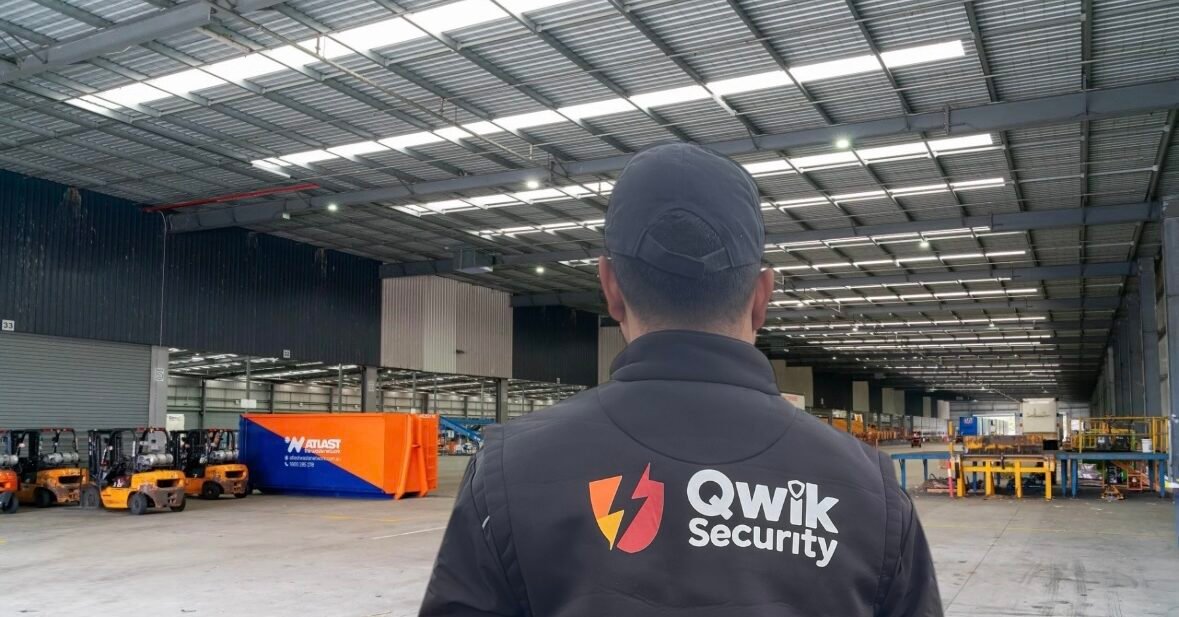
Asset protection security is ongoing guarding of a property and what is on it. A licensed guard is posted on site, or checks it on a set schedule, to deter theft, damage and unauthorised entry over weeks or months. In Melbourne, Qwik Security provides asset protection guards under Victorian private security licence Z53-165-60S.
The term gets used loosely, so this guide sets out what it means in practice, what it protects, how long-term cover differs from a one-off booking, and what to settle before you sign a contract.
What does asset protection security actually mean?
In the guarding industry, asset protection means keeping a property, its contents and its equipment safe for an extended period. The focus is the asset, not a crowd or an event. The guard’s job is to be seen, control who gets in, check the site for damage or tampering, and act on agreed instructions when something is wrong.
You will also see the job title asset protection officer. In retail it often means a loss prevention officer working inside a store. On sites, buildings and warehouses it means a licensed security guard assigned to protect property, usually on a long-term roster. This guide uses the second meaning.
Asset protection is not crowd control. Screening entry to a venue, managing behaviour and removing people are crowd controller duties under Victorian licensing, and they are covered on our event pages, not here.
What assets does an asset protection guard protect?
Most long-term asset protection work in Melbourne falls into a few groups:
- Warehouses and industrial yards. Stock, loading docks, containers, forklifts and trucks parked overnight. Common in Hume, Brimbank, Melton and Greater Dandenong. Our guide to warehouse security guards in Victoria covers the day-to-day duties.
- Construction sites over the long haul. Plant, tools, copper and fixtures on multi-month builds, and sites paused between stages or waiting on finance. See our construction and infrastructure security page.
- Vacant and decommissioned buildings. Empty offices, closed schools, former factories and properties waiting on sale or demolition, where squatting, vandalism and metal theft are the main risks.
- Owners corporation property. Car parks, lobbies, mail rooms and common areas in residential and mixed-use buildings. Strata managers can read more on our owners corporation security services page.
- Plant, equipment and materials in transit. High-value deliveries staged on site, fit-outs with stock already installed, or equipment left after a project wraps up.
How is long-term asset protection different from short-term guarding?
The guard’s licence and core duties are the same. What changes is how the cover is planned, staffed and reviewed. Long-term contracts reward setting things up properly at the start.
| Factor | Short-term guarding (one-off or a few weeks) | Long-term asset protection (months or ongoing) |
|---|---|---|
| Typical trigger | A break-in, a shutdown period, a delivery, an urgent gap | Ongoing risk to stock, equipment or an empty building |
| Planning | Brief verbal or written instructions, fast start | Written site instructions, risk review and agreed escalation contacts |
| Guard continuity | Whoever is available for the shift | A small regular team who learn the site and its normal patterns |
| Duties | Presence and basic checks | Set patrol routes, access logs, key and alarm control, contractor sign-in |
| Reporting | Shift report for each booking | Shift reports plus trends over time, such as repeat entry points or faults |
| Review | Ends when the booking ends | Regular reviews to adjust hours, posts and duties as the risk changes |
| Pricing basis | Hourly rate for the booked shifts | Agreed roster over a contract term, with changes by notice |
Guard continuity is the biggest practical difference. A guard who has worked a site for months knows which gate sticks, which contractor arrives early and what a normal Tuesday night looks like. That makes unusual activity easier to spot.
How do you scope an asset protection contract?
Work through these points before you ask for quotes. Providers can only price what you describe, and gaps here turn into disputes later.
- List the assets. What would hurt most to lose: stock, plant, the building itself, data, or the safety of people who use it.
- Find the exposed hours. Pay for the hours the site is at risk, not every hour. For many sites that is nights, weekends and public holidays, when no one else is there.
- Map access points. Gates, doors, docks, roof access, fence lines and neighbouring properties. Mark the ones that need a person and the ones that only need checking.
- Write the duties down. Patrol frequency, what gets checked, who can enter, what the guard does with deliveries, keys and alarms, and what they must not do.
- Set escalation contacts. Who the guard calls first, second and third, and when emergency services are called directly.
- Decide the cover type. A guard on site the whole time, scheduled patrols, or a mix. Our post on static security guards vs mobile patrols walks through that choice.
- Agree the reporting format and a review date. Set a first review at four to six weeks, then at regular intervals.
What affects the cost of asset protection security?
Every site is priced on its own scope, but the same factors drive most quotes:
- Hours and time of day. Guards are paid under the Security Services Industry Award, which sets penalty rates for night shift, Saturday, Sunday and public holiday work. A roster heavy on nights and weekends costs more per hour than weekday daytime cover.
- Number of posts. One guard can cover one gate and a patrol route. Two separate entries, or a site too large to walk in a reasonable time, may need a second post.
- Contract length. A longer committed roster is easier to staff with a regular team than scattered short bookings.
- Site conditions. Lighting, shelter, toilets, power and phone reception all affect guard welfare and safety. Remote or lone-worker posts may need extra welfare checks.
- Duties beyond presence. Contractor inductions, key registers, alarm response, concierge-style front desk work or vehicle checks add time and skill.
- Mobilisation. Same-day starts cost more to arrange than a planned start date.
Ask for a quote broken down by shift type, so you can see what each part of the roster costs and where it could be trimmed.
What should asset protection reporting include?
On a long-term contract, reports are how you know the cover is working when you are not there. At minimum, each shift report should show when and where the guard was, what they checked and what they found.
Qwik Security’s shift reports are time-stamped and geo-located, with photos and incident notes. Over a long contract, look for patterns as well as single incidents: the same fence section damaged twice, lights out in one area, or contractors arriving outside approved hours. Our guide to reading security guard reports explains what a good report looks like.
What licence does an asset protection officer need in Victoria?
There is no separate “asset protection” licence. Protecting, watching or guarding property while unarmed is the unarmed guard sub-activity of the security guard licence, issued by Victoria Police Licensing and Regulation Division. Victoria Police lists CPP20218 Certificate II in Security Operations as the training qualification for unarmed guard work.
The business supplying guards must hold its own private security business licence. Since the Private Security Act changes of June 2025:
- Guards working as independent contractors on their own ABN need a business licence as well as their individual licence.
- A provider that wants to subcontract your work must get your written consent before it does, and give you written notice with the names and licence numbers of each proposed subcontractor.
You can check any guard or company on the Victoria Police public register of licence holders, which shows the licence type, authorised activities and expiry date. Qwik Security’s Victorian licence number is Z53-165-60S, and we carry $20 million public liability insurance. Our asset protection and static guarding service page sets out how we staff long-term sites.
Frequently asked questions
What is the difference between asset protection and static guarding?
Static guarding describes how the cover is delivered: a guard stays at the site for the shift. Asset protection describes the goal: protecting property and contents over time. Most asset protection contracts use static guards, sometimes combined with scheduled patrols.
What does an asset protection officer do?
On a site or building, an asset protection officer is a licensed security guard who controls access, patrols the property, checks for damage or tampering, manages keys and alarms as agreed, and reports each shift. In retail, the same title often means a loss prevention officer.
Do asset protection guards need a licence in Victoria?
Yes. Guarding property while unarmed is the unarmed guard sub-activity of a Victorian security guard licence, issued by Victoria Police. The company supplying them also needs a private security business licence. Both can be checked on the Victoria Police public register.
How long is a typical asset protection contract?
It depends on the risk. Vacant buildings and paused construction sites often need cover until sale, demolition or restart, which can run for months. Warehouses and owners corporations often keep ongoing contracts with regular reviews.
How much does asset protection security cost in Melbourne?
It is priced on your scope. The main factors are the hours covered, how many are nights, weekends or public holidays, the number of guard posts, contract length, site conditions and any extra duties. Ask for a quote broken down by shift type.
Need long-term cover for a site, building or warehouse? Call our 24/7 operations team on 1300 207 160 or request an asset protection quote with your address, the hours you need covered and what is on site.