

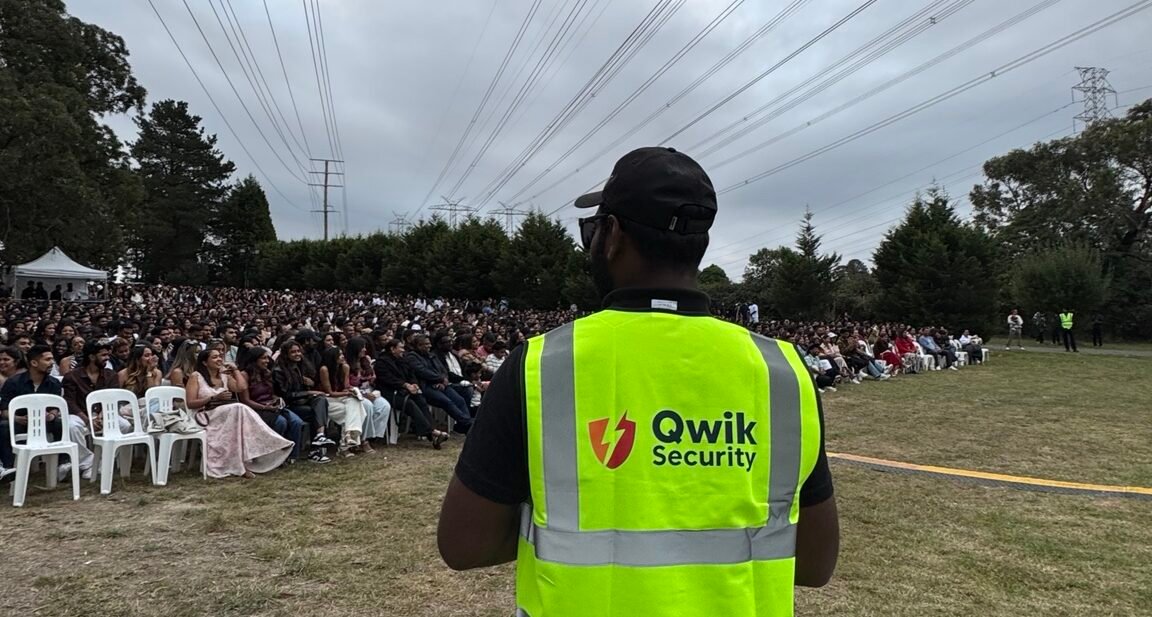
A loss prevention officer is a licensed security guard who reduces theft and stock loss in a store by watching for shoplifting, deterring offenders and reporting incidents. In Victoria the work is security guard work, so the officer needs a Victoria Police licence. Qwik Security provides licensed guards for Melbourne retailers, with time-stamped shift reports for every shift.
This guide explains what loss prevention officers do, what they can and cannot legally do in Victoria, and how to tell whether your store needs one.
What does a loss prevention officer do?
Loss prevention covers any work aimed at stopping stock, cash or property leaving the business without being paid for. On the shop floor that usually means:
- Visible deterrence. A uniformed officer at the entrance or on the floor puts off opportunistic theft.
- Watching high-risk areas. Fitting rooms, high-value displays, blind spots and self-checkouts.
- Working with CCTV. Watching live footage and directing attention to suspicious behaviour.
- Bag checks. Checking bags on exit where the store’s conditions of entry allow it.
- Responding to incidents. Approaching people, calling police and supporting staff when someone becomes aggressive.
- Reporting. Recording incidents with times, descriptions and outcomes, so patterns and repeat offenders become visible.
- Opening and closing. Being present while staff open, close and move cash.
The Security Services Industry Award 2020 lists loss prevention as part of the security services industry, so officers are paid under that award.
Does a loss prevention officer need a licence in Victoria?
Yes. Victoria Police defines a security guard as a person employed or retained to “protect, watch or guard any property”, including by monitoring CCTV. Loss prevention fits that definition. The officer needs an Individual Operator licence endorsed for the right security guard sub-activity, and the company supplying them needs a Business licence. Our guide to security licences in Victoria and NSW explains how to check both.
What are the legal limits on bag checks and arrests?
This is where store owners most often get it wrong. The rules below are general information, not legal advice.
Bag checks
Consumer Affairs Victoria says a store may ask to check bags only if the customer has accepted the conditions of entry. The notice must be clearly displayed and visible before the customer enters. Bag searches are not expressly regulated by the Australian Consumer Law or other Victorian legislation.
Customers can refuse. If they do, staff can ask them to leave, refuse to sell to them, or call the police if they believe an offence such as theft has happened. A loss prevention officer works within the same limits.
Arrests
A security guard in Victoria has no special police powers. Section 458 of the Crimes Act 1958 lets any person arrest someone without a warrant only if they find that person committing an offence, and only if they reasonably believe the arrest is necessary, for example to make sure the person goes to court or to stop the offence continuing. Legal guides also note that only reasonable force may be used and that the person should be handed to police without delay.
Because a wrongful arrest can lead to claims against the store and the provider, many retailers adopt an “observe and report” policy: the officer watches, records, calls police and does not physically detain anyone unless there is a clear safety reason. Agree your policy in writing with your provider before the first shift.
Does your store need a loss prevention officer?
Use this table as a starting point. A security review of your store should confirm it.
| Sign | What it suggests | Starting option |
|---|---|---|
| Stocktake losses rising quarter on quarter | Theft or process gaps are growing | Officer at peak trading times, plus a review of processes |
| Repeat offenders staff can recognise | The store is seen as an easy target | Visible uniformed officer at the entrance |
| Staff facing aggression when they approach people | A staff safety risk, not only a stock risk | Licensed officer during the riskiest hours |
| High-value, easy-to-carry stock | Losses add up quickly from a few incidents | Officer near high-value displays, CCTV support |
| Late-night trading or seasonal peaks | Busy floors and tired staff | Extra cover for those trading hours only |
| Low losses, small store, good CCTV | Risk may not justify a full-time officer | Lock-up checks or mobile patrols after hours |
For a broader look at protecting a store, see our retail security guards guide. For after-hours cover, our mobile patrol service is a lower-cost option to a full-time guard.
What should you agree with your provider?
- The hours and areas the officer covers
- Your bag check policy and the conditions of entry notice
- Your approach and arrest policy, including observe and report
- Who the officer calls, and when to call police
- How incidents are recorded and how often you get a summary
- The Victorian Risk Management Plan, which clients must complete before security work starts
Frequently asked questions
What is the difference between a loss prevention officer and a security guard?
A loss prevention officer is a security guard whose job focuses on stopping theft and stock loss in a store. In Victoria both need a security licence, because both protect, watch or guard property.
Can a security guard check my bag in Victoria?
Only if you have accepted the store’s conditions of entry, which must be displayed where you can see them before entering. You can refuse, but the store can then ask you to leave, refuse to serve you or call police if it believes an offence has occurred.
Can a loss prevention officer arrest a shoplifter?
Only in limited cases. Under section 458 of the Crimes Act 1958, any person may arrest someone they find committing an offence if they reasonably believe arrest is necessary. Only reasonable force may be used and police should be called straight away. Many stores prefer an observe and report policy.
Do loss prevention officers work in uniform?
Often, because a uniform deters theft. Some stores also use officers in plain clothes to watch for repeat offenders. Ask your provider which suits your store and your risk.
Is a loss prevention officer worth the cost?
It depends on your losses, your staff’s safety and your trading hours. Compare your stocktake losses and incident history against the cost of cover for your riskiest hours, not just a full week.
Talk to us about your store. Call our 24/7 operations team on 1300 207 160 or request a quote. You can also read about our loss prevention and risk management security.