

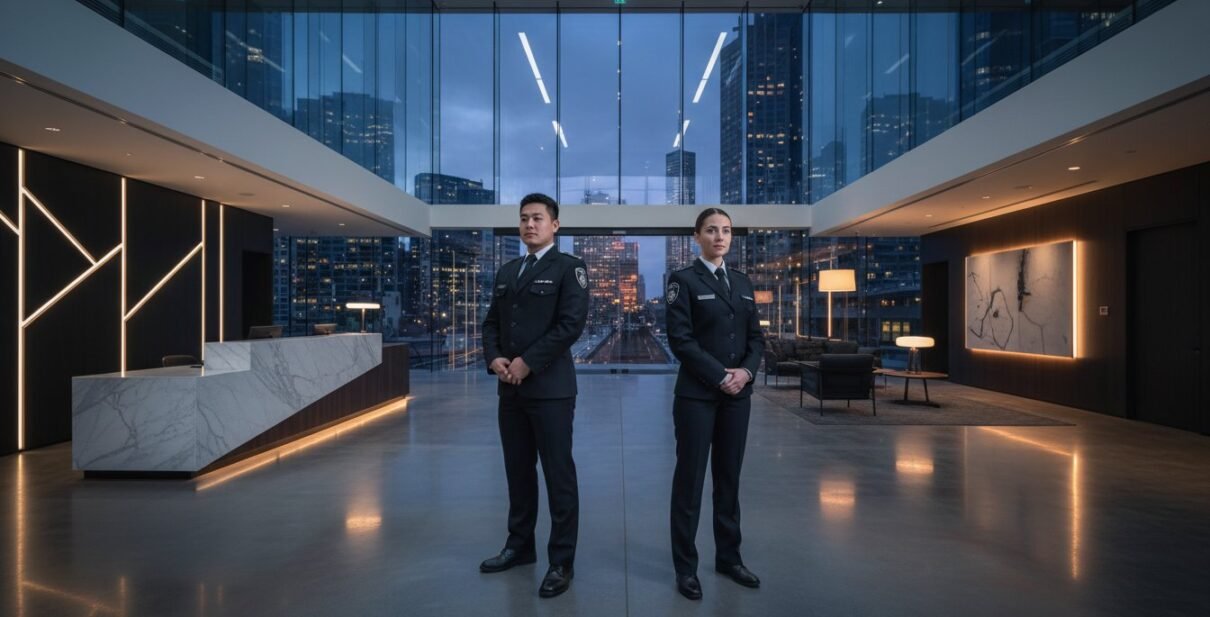
When protecting high-value assets and people, the line between ‘good enough’ and ‘truly secure’ can be blurry. You might be wondering if a standard guard is sufficient, or if your operations demand the advanced expertise of a protective security officer. Understanding this distinction is crucial, especially when you need to justify the investment in a higher level of security for your business.
A PSO is more than just a presence; they are your first line of proactive defence. Their duties extend far beyond simple observation, requiring specialised training, risk assessment capabilities, and the skills to de-escalate or respond to complex threats immediately. They represent a significant step up in professionalism and capability, providing total peace of mind in high-risk environments.
This guide provides the clarity you need. We will break down the key responsibilities and specialised skills of a Protective Security Officer, empowering you to confidently determine the right level of protection for your Melbourne-based assets, people, and premises.
Defining the Protective Security Officer (PSO) Role
When your security needs demand more than just a basic presence, a protective security officer (PSO) provides a higher level of safety. These are not standard security guards; they are highly trained professionals whose primary mission is proactive threat prevention. While a traditional guard might observe and report, a PSO is trained to assess, anticipate, and neutralise risks before they escalate. Their role is to be your first, and most effective, line of defense.
This distinction is crucial. A PSO operates with a heightened sense of awareness and a mandate for direct protection, making them essential for environments where the stakes are significantly higher.
Beyond the Basics: What Sets a PSO Apart?
The difference between a standard guard and a protective security officer lies in their advanced training and operational focus. They are selected and trained to operate under pressure with exceptional professionalism. Key differentiators include:
- Advanced Training: PSOs undergo rigorous training in dynamic risk assessment, behavioural analysis, and advanced observational techniques to identify potential threats long before an incident occurs.
- Specialised Skills: They possess critical skills in conflict de-escalation, counter-surveillance, and rapid emergency response, ensuring they can manage complex situations calmly and effectively.
- Critical Responsibility: PSOs are frequently entrusted with protecting Australia’s critical infrastructure, high-value corporate assets, and key personnel, operating under strict protocols.
The PSO’s Operating Environment
You will find PSOs deployed in locations where security cannot be compromised. Their presence is a powerful and visible deterrent against potential threats. Common environments include government buildings, corporate headquarters, data centres, and major public events. In these high-stakes settings, such as federal facilities similar to those guarded by the United States Federal Protective Service, the PSO’s role is non-negotiable. They are there to actively safeguard sensitive information, protect valuable assets, and ensure the personal safety of employees and VIPs, providing total peace of mind.
Core Duties: A PSO’s Day-to-Day Responsibilities
A Protective Security Officer (PSO) delivers more than just a presence; they provide a dynamic shield for your business. Their responsibilities are a comprehensive blend of proactive prevention and rapid, decisive reaction. Unlike a basic guard, a PSO is constantly engaged in tasks that identify, mitigate, and respond to threats before they escalate. This ensures your property, assets, and people are under constant, professional protection.
Access Control and Identity Verification
Your first line of defense starts at the front door. A PSO enforces strict access protocols to ensure only authorised individuals enter your premises. This is a critical function that prevents unauthorised access and maintains a secure environment 24/7.
- Strict Entry/Exit Management: Controlling all access points with unwavering professionalism.
- Credential Verification: Diligently checking IDs, staff credentials, and visitor appointments.
- Advanced Screening: Operating equipment like metal detectors or x-ray scanners to intercept threats.
- Detailed Record Keeping: Maintaining accurate, compliant visitor logs for accountability.
Proactive Patrolling and Surveillance
True security is about preventing incidents, not just reacting to them. A professional protective security officer doesn’t just wait for alarms; they actively hunt for risks. This focus on prevention is a core function, detailed in frameworks like the U.S. government’s official PSO service requirements, which outline surveillance and deterrence as primary duties. This visible and vigilant presence is your most powerful deterrent.
- Systematic Patrols: Conducting thorough, regular patrols of the entire property, both internal and external.
- CCTV Monitoring: Actively watching surveillance systems to detect and assess suspicious activity in real-time.
- Vulnerability Assessments: Identifying potential security weaknesses, such as broken locks or unlit areas, and reporting them for immediate action.
- Visible Deterrence: Maintaining a strong, alert presence to discourage potential offenders.
Incident Response and Emergency Management
When an incident occurs, you need immediate and expert action. PSOs are trained to be the first responders, taking control of situations calmly and efficiently to minimise harm and restore order. Their rapid response is crucial for protecting life and property during any emergency.
- Immediate First Response: Acting swiftly to address security alarms, medical emergencies, or physical threats.
- Emergency Protocol Execution: Leading evacuations and implementing procedures for fire, security, or medical events.
- Conflict De-escalation: Using specialised training to manage aggressive individuals and resolve conflicts safely.
- Professional Reporting: Documenting all incidents with clear, detailed reports for management and, if necessary, Australian law enforcement.
Specialized Skills and Training of a Professional PSO
The effectiveness of a Protective Security Officer is not defined by their uniform, but by the depth and quality of their training. This comprehensive preparation is what separates a simple guard from a true security professional capable of proactive threat mitigation. It’s this investment in advanced skills that delivers real peace of mind and tangible protection for your assets, people, and property.
Advanced Observational and Assessment Skills
A highly trained protective security officer sees what others miss. Their expertise goes beyond simple monitoring; it involves active analysis and assessment to identify risks before they escalate. This proactive stance is built on a foundation of critical skills, including:
- Behavioural Analysis: Training to recognise subtle, pre-threat indicators in individuals or groups, allowing for early intervention.
- Risk Assessment: Proficiency in identifying vulnerabilities in a site’s physical security, from access points to surveillance blind spots. The skills required are often benchmarked against rigorous government standards, such as those covered in the official Australian Protective Service Officer training framework.
- Attention to Detail: A vigilant and systematic approach to patrols and surveillance, ensuring no anomaly goes unnoticed.
Communication and De-escalation Techniques
The most powerful tool an officer possesses is their ability to communicate. Expert verbal skills can defuse a volatile situation faster and more effectively than any physical response. Our professionals are trained to project calm authority, provide clear direction during chaotic events, and de-escalate conflicts before they turn violent. This ensures they can liaise seamlessly with your staff, the public, and emergency services to maintain order and safety.
Emergency Preparedness and First Response
When an incident does occur, response time is critical. A professional PSO is your first line of defence, equipped to act decisively and correctly. Standard training includes certifications in first aid and CPR, emergency evacuation procedures, and crowd management. They are also trained to secure and preserve a scene for law enforcement, ensuring crucial evidence is not compromised. At Qwik Security, our officers are trained to handle any situation. Learn about our team.
PSO vs. Security Guard: Which Service Do You Need?
Choosing the right security isn’t just about hiring a person in a uniform; it’s about matching the professional skill set to your specific risk level. While both security guards and Protective Security Officers (PSOs) are vital to asset protection, they serve distinct functions. Understanding this difference is critical to ensuring your property, people, and operations are truly secure.
Here’s a direct comparison to help you make the right choice, right now.
Scope of Responsibility
The primary difference lies in their operational directive: one is passive, the other is active.
- Security Guard: Primarily focused on observation, deterrence, and reporting. Their presence discourages opportunistic crime. They monitor CCTV, control access points, and are trained to alert authorities. A guard is a visual deterrent.
- Protective Security Officer: Tasked with proactive protection and direct threat response. A protective security officer identifies potential risks, de-escalates conflicts, and is trained to manage security incidents as they unfold. They are an active line of defence.
Training and Skill Level
A higher level of responsibility demands a higher level of training.
- Security Guard: Holds the required Australian security licence (e.g., Certificate II in Security Operations) and receives specific training for your site. They are professional and highly competent in their defined role.
- Protective Security Officer: Possesses advanced training that goes far beyond standard licensing. This includes comprehensive risk assessment, advanced first aid, and dynamic threat response. Many PSOs come from prior law enforcement or Australian Defence Force backgrounds.
Typical Scenarios for Each Role
The right choice depends entirely on the value of your assets and the perceived threat level.
- Hire a Security Guard for: Environments where a visible presence is the main objective. This includes low-risk retail security, after-hours construction site monitoring, and gatehouse duties.
- Hire a Protective Security Officer for: High-traffic or high-risk locations where threats are more probable. This includes corporate lobbies, government facilities, major events, and the protection of high-value assets or VIPs.
Ultimately, your decision comes down to a clear assessment of your security needs. Do you require a vigilant observer or a highly trained responder? Getting this right is the first step toward total peace of mind. If you’re unsure which level of protection is right for you, the security experts at Qwik Security can provide a rapid, professional assessment.
When to Hire a Protective Security Officer for Your Business
Standard security measures are often not enough. When your risks are elevated, you need a higher level of protection. Deciding to hire a protective security officer is a strategic investment in the total safety of your assets, people, and reputation. It’s about moving from a reactive stance to a proactive defence.
If your business fits any of the following scenarios, it’s time to consider an elite security solution.
Protecting High-Value Assets or Sensitive Information
When what you’re protecting is irreplaceable, you need an officer with advanced training. A visible, highly-skilled presence is your first and best line of defence against theft, espionage, and damage. This is essential for facilities that are prime targets due to their valuable contents.
- Critical Infrastructure: Data centres, communication hubs, and utility plants.
- Financial Institutions: Banks, trading floors, and high-end jewellers.
- Sensitive Facilities: Research laboratories, pharmaceutical storage, and sites holding intellectual property.
Managing High-Traffic or High-Profile Locations
Visibility and high foot traffic create complex security challenges. A protective security officer is trained in threat assessment, crowd dynamics, and de-escalation, making them essential for maintaining order and safety in dynamic environments.
- Corporate Headquarters: Buildings with numerous employees, visitors, and high-profile executives.
- Public Venues & Events: Conferences, shareholder meetings, and product launches requiring seamless crowd control.
- Prominent Locations: Landmarks or buildings that are publicly known and could be potential targets.
Enhancing Corporate and Employee Safety
Your people are your most valuable asset. Ensuring their safety is paramount, especially in high-stress environments or when facing specific threats. A professional officer provides immediate peace of mind and guarantees a rapid, expert response to any incident, from medical emergencies to direct threats.
Unsure of your risk level? Get a Qwik security assessment now.
Don’t wait for an incident to reveal your security weaknesses. Investing in a professional security solution is a decisive step towards securing your business’s future. For a comprehensive strategy tailored to your specific needs, contact the experts at qwiksecurity.com.au today.
Secure Your Assets with a Professional PSO
Understanding the role of a Protective Security Officer is crucial for safeguarding your most valuable assets. As we’ve covered, their duties extend far beyond simple observation, involving proactive threat assessment, advanced emergency response, and specialized training for high-risk environments. Choosing the right level of security—and knowing when to engage a professional protective security officer—is the most important decision you can make for your business’s safety.
When your security needs are immediate and non-negotiable, Qwik Security is your first line of defence. Our fully licensed and highly trained professionals are ready for rapid deployment, backed by a 24/7 National Operations Centre. We guarantee a guard on-site in as little as 60 minutes, delivering the peace of mind you deserve.
Need Total Protection? Secure Your Premises with Expert PSOs Today.
Take decisive action to protect what matters most.
Frequently Asked Questions
What specific qualifications and licenses should a Protective Security Officer hold in Victoria?
In Victoria, a professional protective security officer must hold a valid Private Security Licence issued by Victoria Police’s Licensing and Regulation Division. This requires completing a Certificate II in Security Operations, holding a current First Aid certificate, and passing a comprehensive National Police Check. The licence specifies the activities they are qualified for, such as Unarmed Guard and Crowd Controller. At Qwik Security, all officers meet these stringent standards, ensuring fully compliant protection.
Are Protective Security Officers typically armed?
The vast majority of PSOs in Melbourne operate unarmed. They are highly trained professionals skilled in de-escalation, conflict resolution, and physical intervention techniques to manage threats effectively without firearms. Armed services are a specialised, high-risk category requiring additional, strict licensing and are deployed only after a thorough risk assessment. We can determine the appropriate and safest level of protection for your needs, ensuring your peace of mind.
What industries in Melbourne most commonly hire PSOs?
Protective Security Officers are vital across many Melbourne industries. They are commonly deployed to secure corporate office buildings, retail shopping centres, and major construction sites. You will also find them providing essential safety services in healthcare facilities like hospitals, at educational institutions, and managing access control for logistics centres and manufacturing plants. Their versatility makes them a first line of defence for a diverse range of commercial assets and operations.
Can PSOs be hired for short-term assignments or events?
Absolutely. Qwik Security specialises in the rapid deployment of PSOs for short-term needs. This is ideal for corporate functions, music festivals, private parties, or providing temporary asset protection during a specific project. Our agile service ensures you can secure a professional, highly trained security presence exactly when and where you need it, for any duration. We are ready 24/7 to meet your urgent security requirements with speed and efficiency.
How does a PSO’s role differ from a Victoria Police Protective Service Officer?
This is a crucial distinction. Victoria Police Protective Service Officers are government employees with specific legal powers, primarily assigned to the public transport network. In contrast, a private PSO is employed by a business like yours to protect private property, assets, and people. Our officers operate exclusively on your premises, focused on your specific security needs like access control, patrols, and incident response, acting as your dedicated first line of defence.
What is the process for hiring a PSO for my business?
Hiring a PSO from Qwik Security is a fast and simple process. It starts with an initial contact via phone or our online “Qwik Quote” form. We then conduct an immediate needs assessment to understand your unique security risks. You will receive a clear, comprehensive proposal outlining our solution. Once you approve, we rapidly schedule and deploy our professional officers to your site. Our entire process is built for speed and your total peace of mind.